SportDex: Sport Card identify
- 4.8
- Rating
- 50.00K
- Installs
- Free
- Price

 Analysis by App-foxy
I approached SportDex as a beginner who wanted a less messy way to identify sports cards, keep track of a collection, and get a clearer idea of what individual cards might be worth. Its focus is practical rather than flashy: scan a card, review the information, consider grading, organize the collection, and look at marketplace possibilities from one place. That combination makes it more interesting than a simple camera-based identifier, especially if you are gradually building a collection instead of checking one card only once.
The app comes from PlantIn and sits in the lifestyle category. It is free to install, rated for Everyone, and works on Android devices running version 7.0 or later. The current release is 1.5.0. In everyday use, I would describe it as a starting point for card research rather than a final authority on value. That distinction matters: the app can help you make a more informed decision, but a scan should not replace careful inspection, comparison with recent sales, or professional grading when the card is genuinely important.
From the first scan to a useful collection habit
I see SportDex working best when a scan becomes the start of a small, repeatable routine rather than a verdict on a card. I’d use it to sort what I own, flag uncertain matches, and decide which cards merit closer inspection before looking at possible values. That practical distinction sets up the next section: what makes the combined workflow useful, and where I’d still slow down.
You May Also Like

 Blood Strike: 2.5 Anniversary
Blood Strike’s Loadouts Turn Every Drop Into a Tactical Gamble
A close look at Blood Strike’s custom loadouts: how fast access to signature weapons reshapes its battle royale rhythm, rewards preparation, and narrows the gap between fights.

 Pandora - Music & Podcasts
Pandora’s Music Is Easy to Start, but Harder to Recover
Pandora’s strength is its low-effort path from a seed to a station. Its weak spot is how much confidence it asks you to place in connection, setup, and quiet recovery.

 8 Ball Pool
 Is Built on Rivalries, Rematches, and Routine
A close look at the rivalries, rematches, shared routines, and unanswered safety questions that turn a quick pool match into a persistent mobile community.

 Samsung Music
’s Quiet Strength Is Playing What You Already Own
Its reach comes less from spectacle than from dependable access to a personal library. That simplicity is both the app’s strongest retention engine and its ceiling.

 AccuWeather: Weather Radar
AccuWeather Review: A Quick, Clear Forecast for Everyday Decisions
For everyday plans, the best forecast is the one you can understand quickly. AccuWeather makes rain timing, radar, and local conditions easy to act on, with a few trade-offs.

 Hill Climb Racing
Why Hill Climb Racing Still Turns Crashes Into One More Run
A tiny car, a bumpy hill and one more upgrade: Hill Climb Racing keeps resurfacing because its simple chaos makes every near-miss feel personal.
More From Our News Desk
View All News


What to expect before you begin
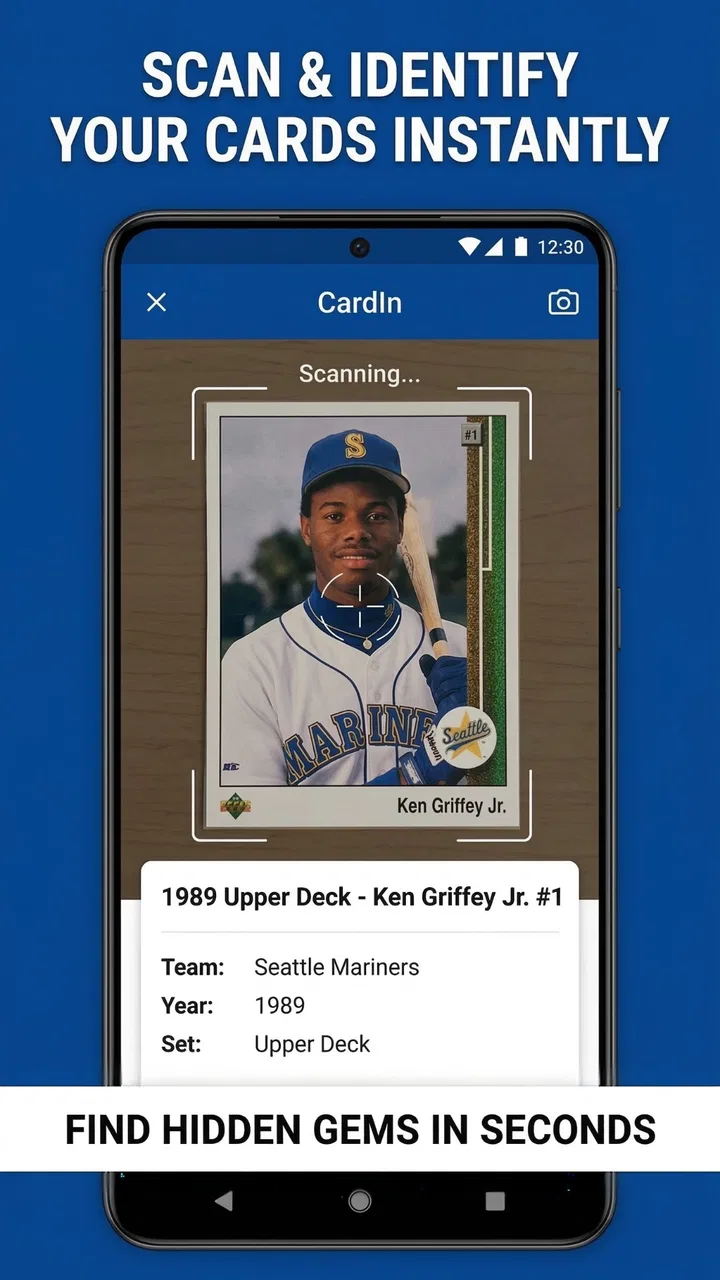
The store summary presents SportDex as a tool for sports card scanning, value checking, PSA grading, collection tracking, and marketplace browsing. Those functions point to a complete collecting workflow. Instead of switching between a camera identifier, a spreadsheet, a grading guide, and a sales platform, you can use one app as the place where those steps meet.
That does not mean every result will be equally useful for every card. Sports cards can be difficult to identify when the image is blurry, the player appears in several similar sets, or the card has a variation that is easy to miss. A scan is most helpful when you treat it as a quick first pass. I would still compare the year, team, card number, set design, parallel details, and condition before recording anything important.
The strongest reason to try it is convenience. If you have cards arriving from trades, inherited boxes, or a small purchase, manually researching each one can become tiring very quickly. SportDex gives you a more structured way to move from an unknown card to a saved item. It is especially suited to collectors who want to reduce repeated searching and create a running record as they sort.
Its audience is broader than serious investors, too. A parent helping a child identify cards, a casual collector preparing a box for insurance records, or someone deciding which cards deserve closer attention can all benefit from the guided workflow. On the other hand, a person who only wants a definitive buy-or-sell answer may find the process too dependent on card details and condition.
Setting up without making the process harder
After installing the app, I would begin with a small group of cards rather than an entire collection. Choose cards with clear fronts, good lighting, and enough space around the edges for the camera to recognize the design. Starting with an easy example gives you a better feel for the scan flow and helps separate app-related confusion from a genuinely difficult card.
Keep the physical card flat and avoid glare from sleeves or plastic holders. A clean image is more useful than repeatedly scanning from different angles. If the first attempt is not convincing, I would change the lighting and position before assuming the card cannot be identified. This simple adjustment is one of the most practical ways to improve the first session.
It also helps to prepare a consistent sorting routine. I would place cards into three temporary groups: cards that scan cleanly, cards needing a closer look, and cards that may deserve grading or a more careful value check. This prevents the app from becoming a random browsing tool. The real benefit appears when each scan leads to a decision about what to do next.
Because the app includes in-app purchases ranging from $5.99 to $59.99 for an item, I would pay attention to which parts of the workflow are available during ordinary use and which may require payment before committing to a larger collection project. The free installation makes it sensible to test the basic experience first. If you are scanning only occasionally, a paid option may not provide enough practical value for your habits.
Your first meaningful success: identify one card correctly
For a first successful action, choose a card whose player, sport, and visible design are easy to recognize. Hold the phone steadily, let the card fill a useful portion of the view, and check the returned details instead of accepting the first match automatically. The goal is not merely to see a result; it is to confirm that the result belongs to the exact card in your hand.
Once the identification looks right, use the value information as a prompt for further checking. A displayed estimate can help you decide whether a card is worth setting aside, but it should not make you ignore condition. Centering, corners, surface marks, creases, and edges can change the real-world value significantly. A card that looks valuable in a database may be far less attractive if its physical condition is poor.
The same principle applies to grading. The PSA grading reference can be useful when you are deciding whether professional evaluation is worth considering, but I would not send every apparently valuable card for grading. Fees, handling, waiting, and the possibility of a disappointing grade all matter. SportDex is most helpful here as a filter: identify candidates first, then inspect them under good light and compare the likely benefit with the cost and effort.
A realistic example would be opening a mixed box after a family member gives it to you. I would scan a few recognizable cards, save the promising ones, and leave uncertain duplicates for later. After that first pass, the collection tracker becomes more useful because it records progress instead of forcing me to remember which cards I already checked. The app turns a vague pile into a manageable list.
How collection tracking changes the experience
Collection tracking is where the app can become more valuable over time. Identification is a single event, but a collection record gives you continuity. I would use it to separate cards that are already checked from cards awaiting inspection, and to keep potentially valuable items from disappearing back into an unsorted box.
A useful habit is to record cards immediately after checking them rather than postponing the task. Delaying that step creates duplicate work, especially when several cards have similar designs. If you are processing many cards, work in small batches and finish each batch before moving to the next. That makes it easier to notice missing entries and reduces the chance of scanning the same card repeatedly.
I would also avoid treating the tracker as proof of ownership value. A saved card is not automatically a liquid asset. Marketplace interest can vary, and a listed price is not necessarily the same as a completed sale. The tracker is best viewed as an organization tool that helps you know what you have, what needs attention, and which cards deserve independent research.
For a family collection, this organization can be more useful than chasing exact prices. You might want to know which cards belong to a particular person, which ones are duplicates, or which cards should be stored separately. For a seller, the same record can support a more orderly preparation process. For a casual fan, it can simply make the hobby easier to enjoy.
Where new users may become confused
The most likely confusion is the difference between identification and valuation. Recognizing a player and set does not automatically establish a precise market price. Variations, print differences, autographs, memorabilia elements, condition, and grading status can all affect the result. If the app presents a value, I would use it as an orientation point and verify the details before making a purchase or sale decision.
Another common misunderstanding concerns PSA grading. A grading feature or reference can help you think about professional assessment, but it is not the same as receiving an official grade. Before spending money on submission, inspect the card carefully and ask whether the likely improvement in saleability justifies the total expense. A lower-value card may be better kept raw, while a scarce card in excellent condition may deserve deeper consideration.
Marketplace tools can also create unrealistic expectations. Seeing a card offered for a high amount does not mean buyers will pay that amount. I would compare several relevant examples and make sure they match the same variation and condition. If the app helps you discover potential listings, use that information to investigate rather than treating it as a guaranteed outcome.
Scanning errors are another reason to slow down. Similar player cards can look nearly identical at a glance, particularly when the year or card number is small. When a result seems surprising, check the printed details on the card before saving it. This extra moment is far cheaper than building a collection record around the wrong edition.
There is also a practical trade-off between speed and accuracy. A rapid scan of a large box is convenient, but careful verification takes longer. I would use fast scanning for sorting and reserve detailed checking for cards that appear rare, valuable, or personally important. That two-stage approach keeps the app useful without turning every common card into a research project.
Who should use it, and who should choose another approach?
SportDex is a good fit for beginners who want a guided entry into sports card collecting. It is also appealing to collectors who dislike spreadsheets and want scanning, organization, grading-oriented research, and marketplace discovery in one mobile workflow. The average rating of 4.7 from around 471 ratings suggests that the app has made a positive impression among its early audience, while its 10K-plus installs show that it remains a relatively focused tool rather than a massive general-purpose platform.
I would recommend trying it if your main problem is disorganization. The app can give you a repeatable process: identify, verify, save, inspect, and decide whether further research is worthwhile. That sequence is more valuable than any single estimate because it helps you build better habits around your collection.
I would be more cautious if you need advanced inventory management, detailed accounting, or a highly specialized database for rare variations. A spreadsheet may still be better when you need custom fields, purchase costs, sale proceeds, or long-term financial records. Likewise, experienced collectors who already have trusted research sources may find the convenience less important than the precision of their established method.
It may also be the wrong choice for someone expecting instant certainty from every photograph. Sports cards are too varied for a camera result to settle every question. If you are uncomfortable checking card numbers, parallels, condition, and comparable sales, the app cannot remove all of that responsibility. It can shorten the path to an answer, but it does not eliminate the need for judgment.
A smarter routine after the first session
Once the first few cards are saved, I would create a simple weekly routine rather than trying to process everything in one exhausting session. Scan new arrivals soon after they come in, review uncertain matches separately, and inspect promising cards before looking at marketplace possibilities. This order prevents an exciting price estimate from influencing your identification of the card itself.
For cards you may sell, take notes outside the excitement of the moment: exact identity, visible condition issues, and whether the item is raw or professionally graded. Even if you keep the main record in SportDex, this mental checklist helps you describe the card honestly. It also makes marketplace browsing more realistic because you are comparing like with like.
For cards you plan to keep, use the tracker as a memory aid rather than a price board. Grouping cards by sport, player, set, or personal importance can make the collection easier to revisit. A good collection app should reduce the friction of returning to the hobby, and that is where this one has a clear everyday advantage over a loose pile of cards and scattered phone photos.
Privacy and cost are also worth considering in your personal routine. Since the app is free to install but offers paid items, test the functions that matter to you before purchasing anything. If you only need occasional identification, stay with the basic experience unless a paid feature solves a specific problem you actually have. If you scan regularly and value the combined workflow, the purchase may be easier to justify.
My final take for a first-time collector
SportDex is a sensible entry point for anyone who wants to turn sports card discovery into an organized process. I like that its purpose extends beyond recognition: the combination of card identification, value research, grading guidance, collection tracking, and marketplace exploration gives each scan a possible next step. That makes it more useful than a tool that simply tells you a player’s name.
Its limits are equally important. Results still need checking, condition still matters, and marketplace information should not be confused with guaranteed selling prices. The app works best when I use it as a research assistant and collection organizer, not as an automatic appraiser or substitute for professional grading.
For a first session, I would install it, choose a few clear cards, verify each result against the printed details, save only the matches I trust, and then review the cards that deserve closer attention. That path is reassuring because it produces a meaningful result quickly without pretending that collecting is completely automatic. If you want a practical first step into sports card identification and organization, SportDex is worth trying, provided you keep your own judgment in the process.
FAQs for SportDex: Sport Card identify
01What is SportDex: Sport Card Identify and how does it work?
SportDex is an app designed to help users identify and catalog sports trading cards. By using advanced image recognition technology, users can scan their cards to receive detailed information, including player stats, card rarity, and market value. Simply take a clear photo of your card, and SportDex will do the rest, providing an intuitive and user-friendly experience.
02Is SportDex available on both Android and iOS platforms?
Yes, SportDex is available for download on both Android and iOS devices. The app is optimized for a wide range of smartphones and tablets, ensuring a seamless experience regardless of your platform. Users can easily find the app on the Google Play Store for Android devices and the Apple App Store for iOS devices.
03Does SportDex require an internet connection to function?
While SportDex can perform some basic functions offline, an internet connection is required to access the full range of features. This includes updating card databases, accessing market values, and sharing your collection. For the best experience, ensure you have a stable internet connection when using the app.
04Are there any in-app purchases or subscription fees associated with SportDex?
SportDex offers a free version with basic features, but there are optional in-app purchases for advanced features such as premium card valuations, ad-free usage, and access to exclusive content. Users can choose to subscribe on a monthly or yearly basis, depending on their level of engagement and need for additional functionalities.
05Can SportDex identify all types of sports cards?
SportDex is designed to recognize a wide variety of sports trading cards, including popular leagues like the NBA, NFL, MLB, and more. However, the app continuously updates its database to include new and rarer card types. For best results, ensure that your app is updated to the latest version to access the most comprehensive card library.
Pros
- Quickly identifies sports cards with high accuracy.
- User-friendly interface with intuitive navigation.
- Supports a wide range of sports and card types.
- Frequent updates ensure up-to-date card data.
- Offers detailed card information and market value.
Cons
- Requires internet connection for card recognition.
- Limited features in the free version.
- Occasional slow response during peak times.
- Some card types may need manual verification.
- In-app ads can be distracting for some users.

SportDex: Sport Card identify
Gallery